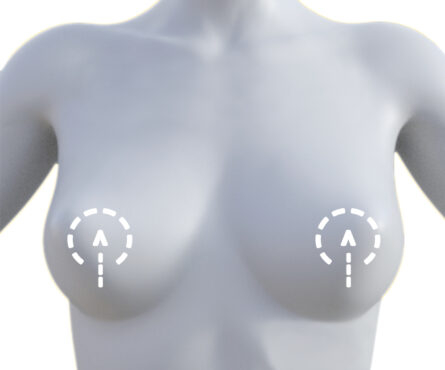
Mastopexy, as a surgical procedure, primarily involves skin tightening and repositioning the breast tissue upwards. Sometimes, minor reduction of internal tissues may be necessary, while in other cases, the use of a silicone implant may be required to restore lost breast volume. The treatment outcome could be compared to the effect of a properly fitted bra for breast lifting, which lasts without the said bra.
The most common reason patients opt for mastopexy is significant skin stretching combined with loss of breast volume, particularly in the upper quadrants. Mastopexy restores the breasts’ proper shape, making them firmer, fuller, and appear younger after the procedure.
Mastopexy can be performed simultaneously with silicone implantation in cases of significant breast volume loss or simply for breast augmentation. In some cases with minor volume loss or asymmetry, autologous fat grafting may be performed. It’s important to note that over time, the breast tissue may stretch again, requiring another surgical correction.
Preoperative planning plays a crucial role in the successful outcome of any surgery. Our surgical approach is based on careful examination and consideration of key factors, like the patient’s breast size, chest wall contour, density of subcutaneous fat tissue and breast tissue, nipple ptosis, skin quality, nipple vascularity, and desired breast size. The goal is to create an aesthetically pleasing breast contour with properly positioned nipple-areola complexes, fullness in the upper pole, tightened skin envelope, symmetry, and volume enhancement using breast implants, while guaranteeing the patient’s safety and swift recovery. During the pre-intervention consultation, the plastic surgeon evaluates the feasibility of the procedure, weighing all the pros and cons, plans the course of surgery, and examines the patient to assure safety and efficiency of intervention.


