Among patients, and even among some medical practitioners, there is a belief that the presence of implants is a contraindication for undergoing mammography. However, there is no compelling evidence to supprt this position. Comprehensive clinical examination is key to proper diagnostics and prevention, so let’s get into this issue and clarify any doubts.
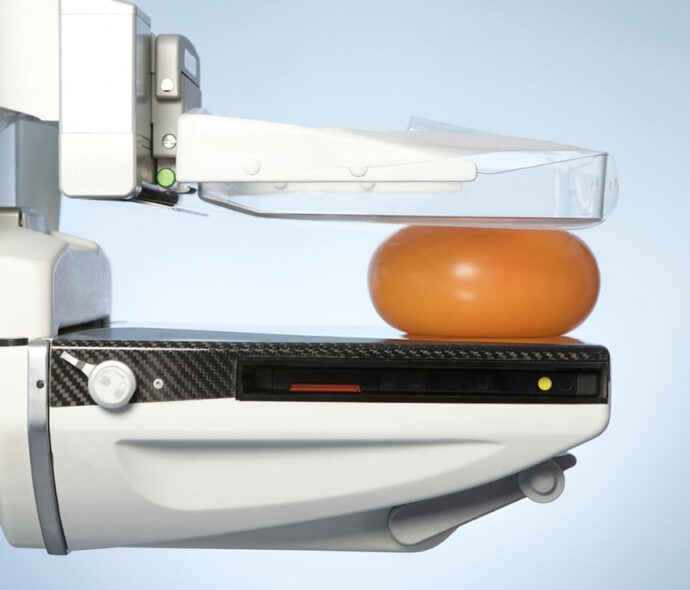
Mammography is a specialized method of examining the breast tissue using X-rays. This diagnostic procedure is used to detect various changes and pathologies in the breast tissue, including both benign and malignant formations. During mammography, the breast tissue is compressed between two plates, and X-ray are passed through the tissues to get images of their structure. The resulting images are studied by doctors to detect anomalies, such as calcifications (mineral deposits), capsules, or tumors that may not be detectable trough routine clinical examination. Mammography is an important tool for early diagnosis of breast cancer and ensuring effective treatment.
The presence of implants in the breast tissue is not a contraindication for digital mammography. Their presence may complicate interpretation of the results, though being examined in specialized facilities with modern equipment and experienced professionals from various fields, such risks can be nullified, granting comfort of the patient and helps avoid unnecessary exposure to X-ray radiation.
It is advisable to check whether the clinic has digital mammograph with the function to capture images with implants and the option for tomosynthesis for layered analysis of the breast. This helps avoid ambiguity in interpreting complex situations and reduces the impact of implants on the quality of diagnosis.
If digital mammography offers image capture with implants, the images clearly show the structure of the breast tissue, skin, and nipple-areolar complex, various types of benign formations, calcifications (invisible by other methods), malignant formations, and possible damage to the integrity of the breast tissue (excluding minor ruptures). In cases of minor ruptures, additional methods such as ultrasound and MRI are used. However, a comprehensive approach remains important for examining any structure of the breast tissue. Regular mammography is highly recommended for adult women of all demographies.