One of the most common complications after breast augmentation surgery is capsular contracture. This condition, in essence, is the patient’s own body “overreacting” to the implants – dense scar tissue forms around the foreign objects, forming a capsule. Normally, this capsule is thin enough that patients do not feel it and it does not interfere with their daily life. However, in certain cases this capsule becomes thick, starts pressing on the implant and adjacent tissues, leading to deformation of the breast and physical discomfort. As mentioned above, the medical term used to describe this condition is capsular contracture.
Risk of capsular contracture development soon after surgery may increase as a result of postoperative seroma, failure to follow postoperative care instructions, or as a result of contracting a viral infection during the rehabilitation period after breast augmentation.
Capsular contracture may also develop over time due to various factors. Complications can arise, for example, from implant protrusion or displacement. Natural wear and tear of the implant is quite common: adjacent muscles constantly move, shifting the implant lightly, which wears down the implant’s coating and eventually displacing it, which may initiate thickening of thescar tissue, leading to development of capsular contracture.
The only way to deal with such a complication is through revision breast surgery, during which the excees scarring is removed, and the implants, if needed, are replaced by new ones.
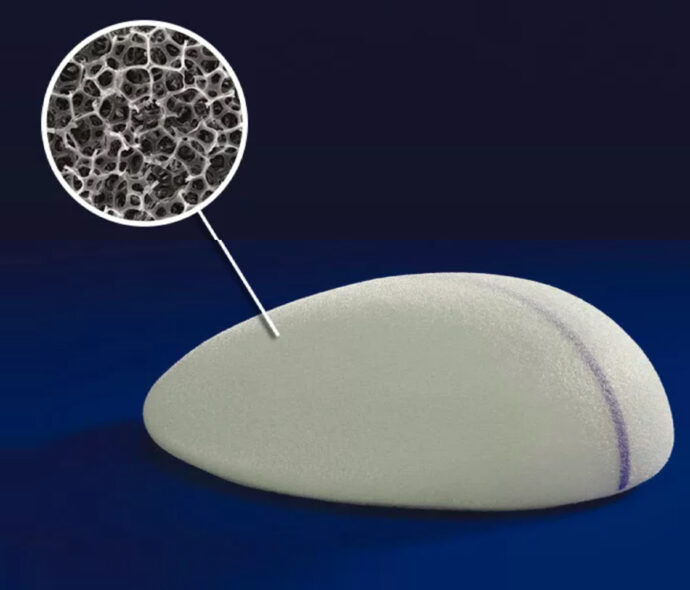
As of now, the best preventive measure for capsular contracture is application of coated breast implants. These implants have textured surface, which prevents scar tissue overgrowth and promotes fixation of implants in place. One of the coating options is polyurethane, and such implants are known to significantly reduce the risk common complications associated with breast augmentation, such as capsular contracture, postoperative seroma, late seroma, implant rotation, postoperative haematoma, implant rupture, and implant folding.
Such implants are filled normal silicone gel, though their shells is covered in medically engineered biocompatible polyurethane. First of all, such coating has a “sticky” effect, adhering to the adjacent tissues, and facilitating proper integration of the implants into breast. The implant virtually becomes a part of the extracellular matrix that comprises the scar tissue, and does not trigger formation of excessive scarrsing. Additionally, such implants are less prone to rotate or be displaced differently, as their “sticky” surface creates a robust connection with the neighbouring tissues.
Polyurethane-coated implants have certain disadvantages when compared to other types:
– First of all, the cost. Polyurethane coating is highly technological, and it is only natural that such implants are more pricey.
– Not all cosmetic surgeons are able to place polyurethane-coated implants. This type of implants requires a high level of skill from the operating surgeon, since these implants can not be easily readjusted, as they “stick” to the tissues immediately. Therefore, placement of polyurethane-coated implants presents certain challenges for surgeons who lack sufficient experience.
– For the very same reasons it may be challenging to find an expert for revision surgery or implant removal. Though in fact, surgical removal or revisionary manipulation of such implants is not really challenging for an experienced practitioner – related manipulations only extend duration of surgery by 10-15 minutes.


