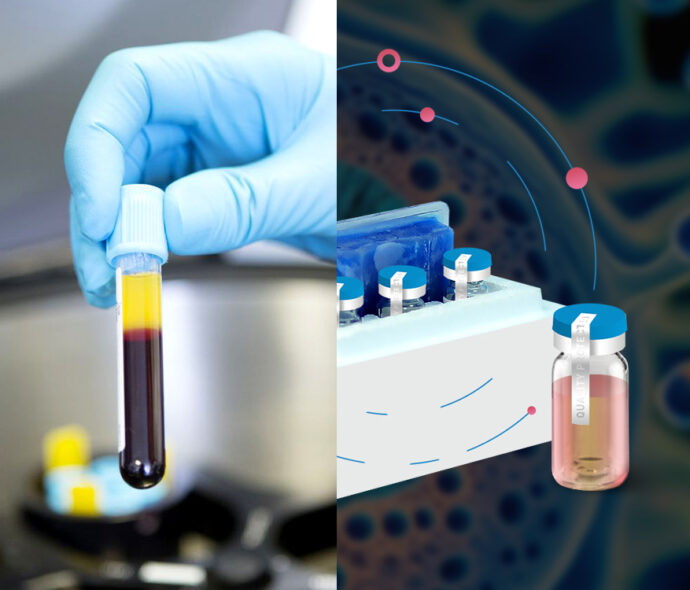
PRP is a biomedical product, which, in fact, is plasma with enriched content of platelets, purified from other blood components. It is derived from patient’s blood by the means of centrifugation. Initially, PRP was used in hematology in early 1970s. Patients, who suffered from low platelet levels required transfusion of platelets only, so protocols for their purification and concentration were developed.
Later on, in 1980s and 1990s PRP technology spread to the Surgery Departments, as it proved effective in post-surgery recovery. Platelts contain specific factors, that promote tissue regeneration, reduce inflammation, kill bacteria and help our cells grow. PRP has become especially popular among periodontologists, maxillofacial and plastic surgeons.
Afterwards, PRP has seen its dawn in orthopedy, as regrowth inducer for severe bone fractures, connective tissue trauma, sport trauma and for patients who have unergone bone transplantation. Now, PRP is being used in heart surgery, gyneacology, urology and neurology. And its popularity in dermatology and trichology is as high as ever.
Though, is it really as effective in all of these fields as claimed? Is it really possible to extract platelet growth factors with a tabletop centrifuge in doctor’s room? Let’s dive into it.
Typically, PRP is produced with the help of commercially available preparation kits. It is very convenient, both for the doctor and the patient. A small volume of blood is drawn (up to 20 ml), and within 15 minutes injection-ready preparation is made right in the doctor’s room.
Platelet Lysate is also a blood-derived product, though it is technologically more complex. One could think of it as a modern version of PRP. First of all, platelet lysate preparation requires larger volumes of drawn blood (100-150 ml), so total number of platelets is way higher. And secondly, platelet lysate is produced in a specialized laboratory, guaranteeing superior purity, quantity and bioavailability of the growth factors.
PRP and PL seem to be similar, but in practice the difference is colossal. It’s all about the active components of the preparations. Both PRP and PL have platelet-derived growth and immunity factors as their active components. These substances are encapsulated inside of our platelets. PRP contains whole, unbroken platelets, and according to recent research, platelets in PRP are not really willing to secrete these sweet factors – up to 50% of these substances stay inside of the platelets after injection, and are simply broken down by the organism later on, without any beneficial physiological effects.
In case of PL, the platelets are broken down, to release all 100% of their inner factors, and then the preparation is purified from platelet debris. This results in higher dose and bioavailability of growth factors, which actually do the job after PRP or PL injection. Moreover, specialized lab has reliable protocols and quality control tools, while commercial PRP preparation kits are known to be variable and utterly inefficient.
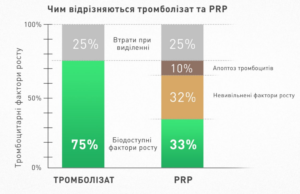
Чим відрізняється тромболізат і плазмотерапія?
Clinical view shows that PL achieves more significant and reliable therapeutic effect, when compared to PRP, while price of both procedures, typically, is similar.
Summing up, PL is better than PRP in many ways:
Our medical team works in accordance to European Standards, providing reliable and effective medical services in city of Rivne. Don’t postpone your health and beuty. Get in touch with us today!


